









Modern livestock management requires precise delivery of essential minerals to maintain animal health and productivity. Mineral salt lick blocks serve as an effective, controlled method for nutrient supplementation. The machinery that manufactures these blocks plays a pivotal role in determining their quality, consistency, and economic viability. This article examines the key aspects of mineral salt lick block making machines, highlighting technological advancements and industry applications.
Core Functions and Operational Principles
A mineral salt lick block making machine typically integrates several processes: precise ingredient proportioning, high-intensity mixing, and high-pressure compaction. Advanced models utilize hydraulic or mechanical pressing systems capable of generating substantial force to form dense, slow-dissolving blocks. Precise control over pressure levels and dwell time is critical, as it directly affects block hardness, durability, and the rate of mineral release.
Modern equipment often incorporates programmable logic controllers (PLCs) to automate the production cycle. This automation ensures consistent output, reduces human error, and allows for quick adjustments to block weight, size, and formula. Integrated sensors can monitor parameters like temperature and pressure, providing real-time data to optimize the production process.
Key Selection Criteria for Producers
When evaluating machinery, manufacturers must consider multiple factors. Production capacity, measured in blocks per hour, should align with operational scale. Energy consumption is a major operational cost driver, making energy-efficient drives and systems increasingly important. The robustness of the frame, the quality of the mold material (often hardened steel or specialized alloys), and the reliability of the hydraulic system are primary determinants of machine longevity and minimal downtime.
Versatility is another crucial consideration. Leading machines can handle diverse raw material mixes, ranging from pure mineral salts to combinations with molasses, protein meals, or herbs. Quick-change mold systems significantly enhance flexibility, allowing a single production line to output blocks of different shapes and sizes.
Industry Impact and Practical Benefits
The availability of reliable block making machinery has transformed nutritional management for ruminants and other livestock. Farmers and feed mills can now produce blocks on-demand, tailoring mineral compositions to regional soil deficiencies, specific animal species, or production stages (e.g., growth, lactation). This localized production reduces logistics costs and ensures freshness.
For equipment producers, the market demands continuous innovation. Trends include developing more compact models for smaller farms, integrating IoT connectivity for remote monitoring and predictive maintenance, and improving designs for easier cleaning and sanitation to meet higher biosecurity standards.
Conclusion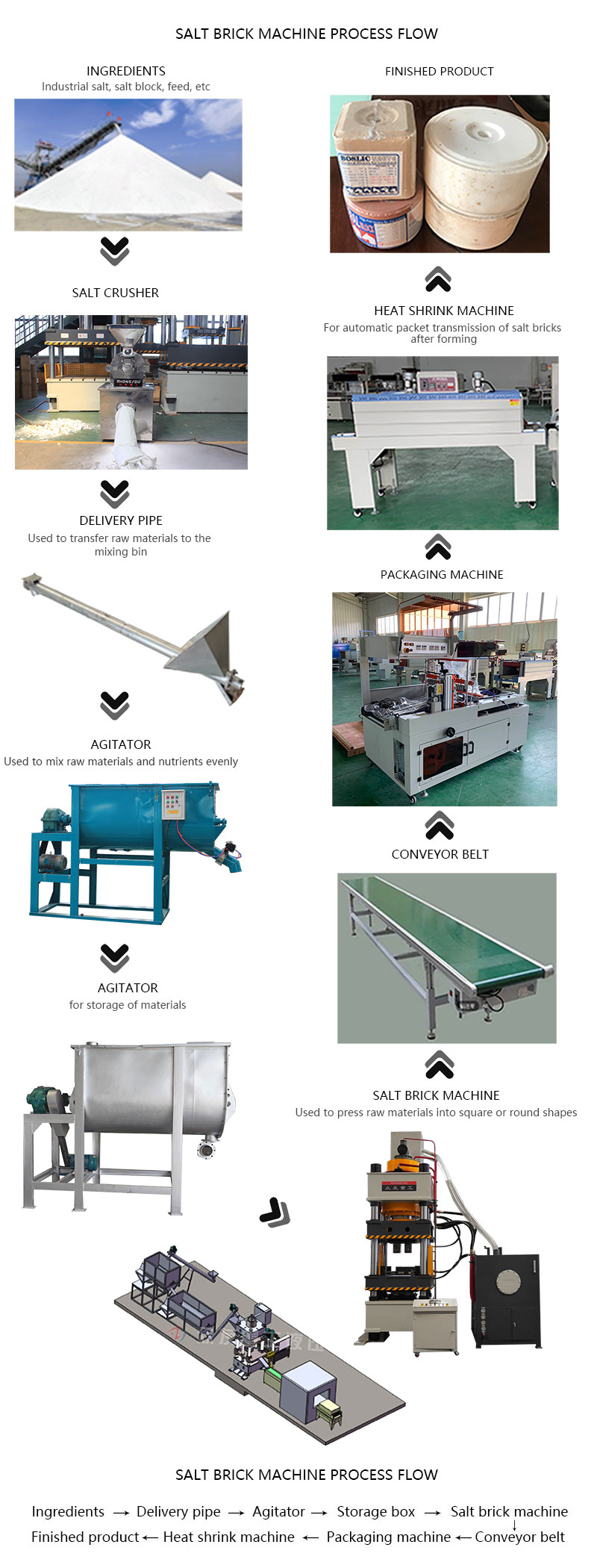
The mineral salt lick block making machine is more than simple industrial equipment; it is a vital link in the chain of modern, precision-based livestock nutrition. Success in this competitive field depends on a manufacturer’s ability to deliver durable, efficient, and adaptable machinery. As nutritional science progresses and farming practices evolve, the technology behind these machines will continue to advance, supporting healthier herds and more sustainable and profitable farming operations worldwide.